Translating ambition into reality
Partnering with Dansk Auto Logik, we completed a successful pilot for electric vehicle (EV) trucking at the end of March. With a charging infrastructure in constant development, the pilot is an important step in decarbonizing inland transportation.
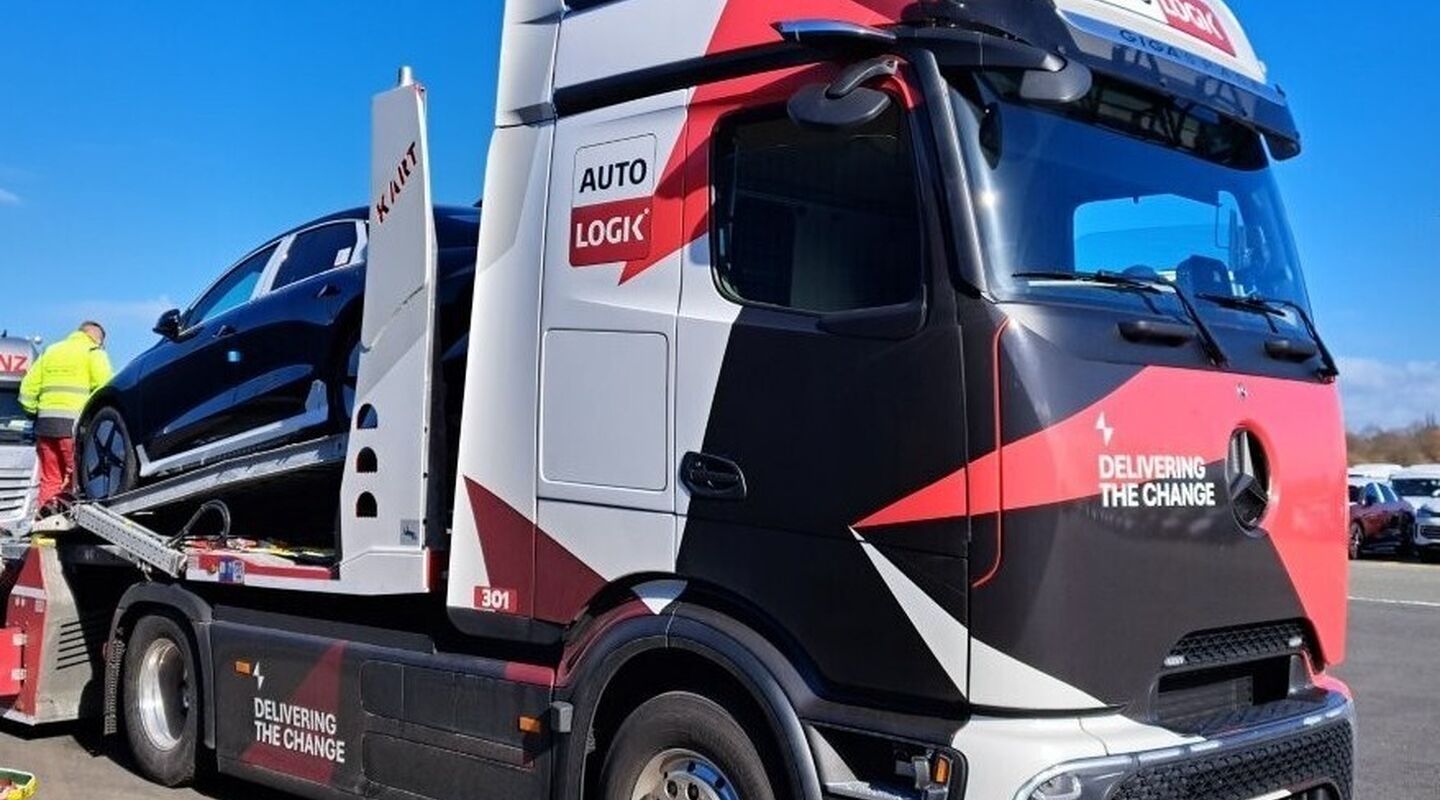
After being loaded off at the port of Bremerhaven, several vehicles were delivered to Kolding, Denmark using electric trucks.
The pilot tested various loads and vehicle types, gave valuable operational insights and a better understanding of the practical challenges and opportunities of electrification in port-to-compound operations.
Hands-on experience
As orchestrator of the Bremerhaven–Kolding flow, we sit at the intersection between customer demand, transport execution, and asset owner capabilities.
Participating in pilots like this enables the company to test what electrification means in real port‑to‑compound operations, where arrival patterns can be uneven and service levels demand reliability and flexibility.
“Pilots like this strengthen our ability to act as an informed facilitator of decarbonization across our supplier ecosystem. By building hands‑on experience together with our partners, we can support more data‑driven discussions with customers about where electrification is already feasible today, where adaptations are required, and what commercial or contractual frameworks are needed to scale adoption over time,” says Joakim Stuart, Business Analysis Manager.
In that sense, the pilot gives the company a practical understanding of how electric trucking performs in real port‑to‑compound operations, supporting more informed decisions about where and how lower emission of inland transport can be introduced over time.
Current challenges and valuable lessons learned
A key finding from the pilot is that electric trucks require more time for charging compared to conventional vehicles, currently limiting the number of trips that can be completed within a given period.
Charging flexibility also proved challenging due to the need to maneuver and decouple trailers for charging. This learning curve is expected, as the team is still becoming familiar with range, charging times, and daily performance.
“The learnings gave us a better understanding of how electric trucks impact planning, capacity utilization, service reliability, and cost structures in subcontracted transport. These insights help us when designing future solutions that can meet customer requirements while reducing emissions in a pragmatic and scalable way,” says Joakim.
From pilot to progress, and the road ahead
Despite initial challenges, the pilot’s results are promising. As familiarity with electric trucking grows, operational planning is expected to be significantly optimized.
Another key takeaway is the ongoing development of charging infrastructure, with more and faster chargers being installed. This expansion is a central factor in boosting productivity and making electric trucking more viable for regular logistics operations.
The pilot marks an important step forward in lower emission transport solutions. We are eager to continue learning and improving, using these insights to guide the adoption of lower-emission inland transport across our operations and supplier network.Business Analysis Manager