Meet our expert: Filip Declercq
Based in Zeebrugge, Belgium, Filip Declercq, Senior Manager Logistics Services Decarbonization, focuses on how we can decarbonize our land-based activities in line with our net-zero 2040 ambition. For Filip, progress depends on clear targets, practical pilots and strong collaboration across our ports, terminals, processing centers, and offices.
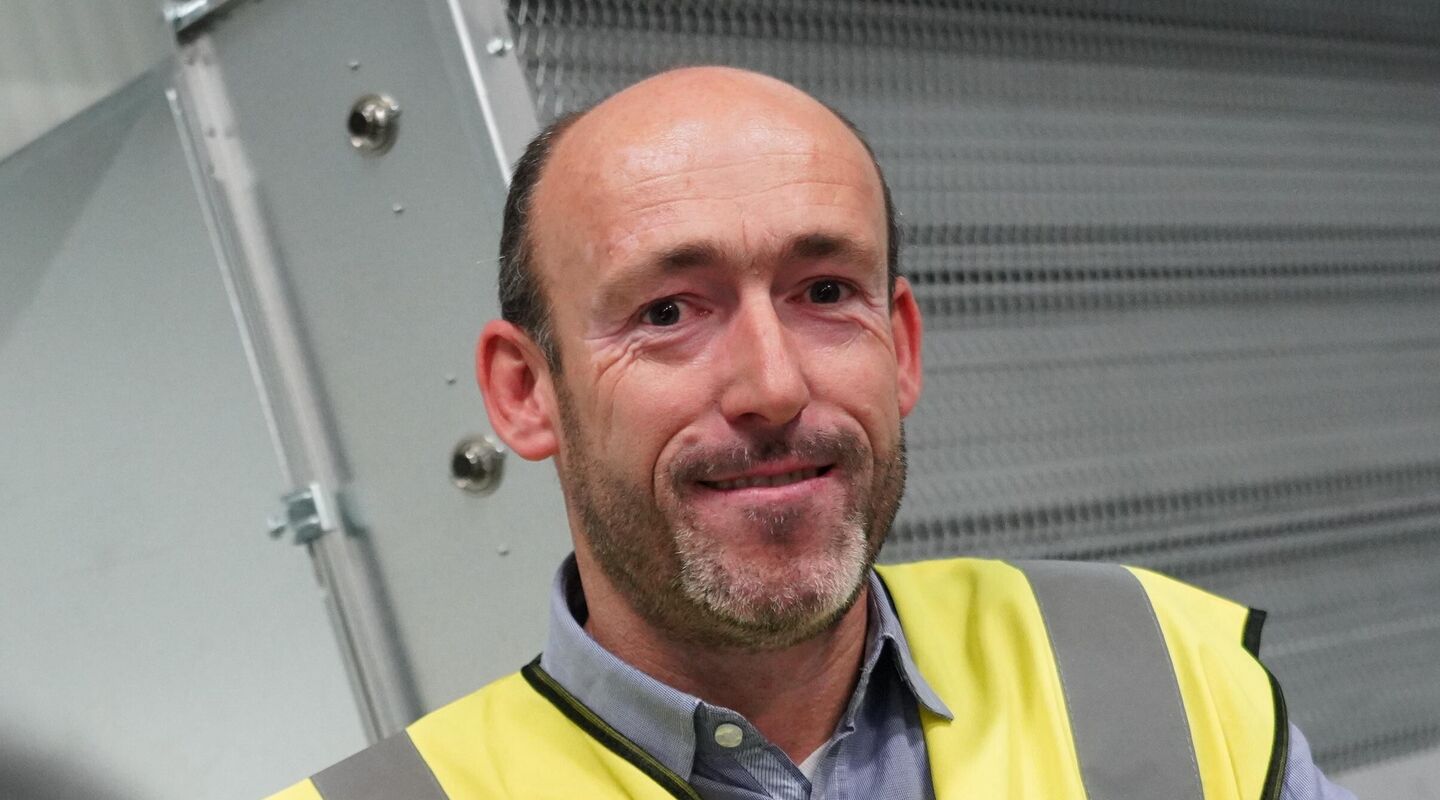
Meet Filip
I joined Wallenius Wilhelmsen in 2008 and moved into Orcelle Accelerator in 2023. Before that I was a Technical Superintendent of a dredging vessel responsible for the vessel’s maintenance and travelling around the world.
What is the Orcelle Accelerator?
The Orcelle Accelerator is a team focused on developing and scaling net-zero, end-to-end solutions by identifying practical ways to reduce emissions across the value chain. It combines technical expertise and cross-functional collaboration to help turn Wallenius Wilhelmsen’s net-zero ambitions into actionable and scalable solutions.
A core part of the Orcelle Accelerator team’s work is finding net-zero end-to-end solutions for customers. We start by defining the scope, calculating emissions and identifying the levers that can reduce them, whether that is using EV trucking, rail, alternative fuels or electrification of fleet for terminal operations.
From there, the focus shifts to cost, verification, and scalability. A pilot can prove that something works, but scaling it requires the whole value chain to move together. That is why we see this work as both technical and collaborative.
Start small and scale
When I joined the team, one of my first priorities was to translate our net-zero 2040 ambition into site-level targets and regular follow-up.
That means reducing Scope 1 emissions from fuels and heating while moving toward renewable electricity for Scope 2. We review progress regularly with senior leaders and local teams, because decarbonization only becomes real when targets are turned into concrete actions at each site.
If there is one phrase that captures my approach, it is this: start small and scale. Pilots in EV fleet and alternative fuels show how change happens in practice. Small steps create proof, uncover barriers, and make it easier to expand what works.
I also believe the business case is improving. In some markets, lower-emission solutions already make sense from both a sustainability and efficiency perspective. The challenge is to focus on investments where it matters most and use each step to accelerate the next one.
A team sport
Internally, decarbonization depends on close cooperation within our Orcelle Accelerator team and across teams, sites and leadership. The knowledge we build in one place can be shared across the business, helping other sites move faster and avoid unnecessary cost. In my view, that practical learning is one of our strongest advantages.
Externally, it depends on suppliers, customers, infrastructure providers and transport partners moving in the same direction. A good example is EV charging. I believe trucks should be able to charge while loading or unloading at terminals, rather than losing time elsewhere. Shared infrastructure like that could make electric transport far more practical to scale.
The path to lower-emission logistics will not be linear, and it will not happen overnight. But by testing solutions, proving what works and scaling with partners, we can keep moving forward.