Behind the build: Meet the people that shaped our new vessel class
Behind every deck, fuel tank, safety system, and design decision stands a team of people who spent years turning an idea into reality. So, who are the people behind the Shaper Class?
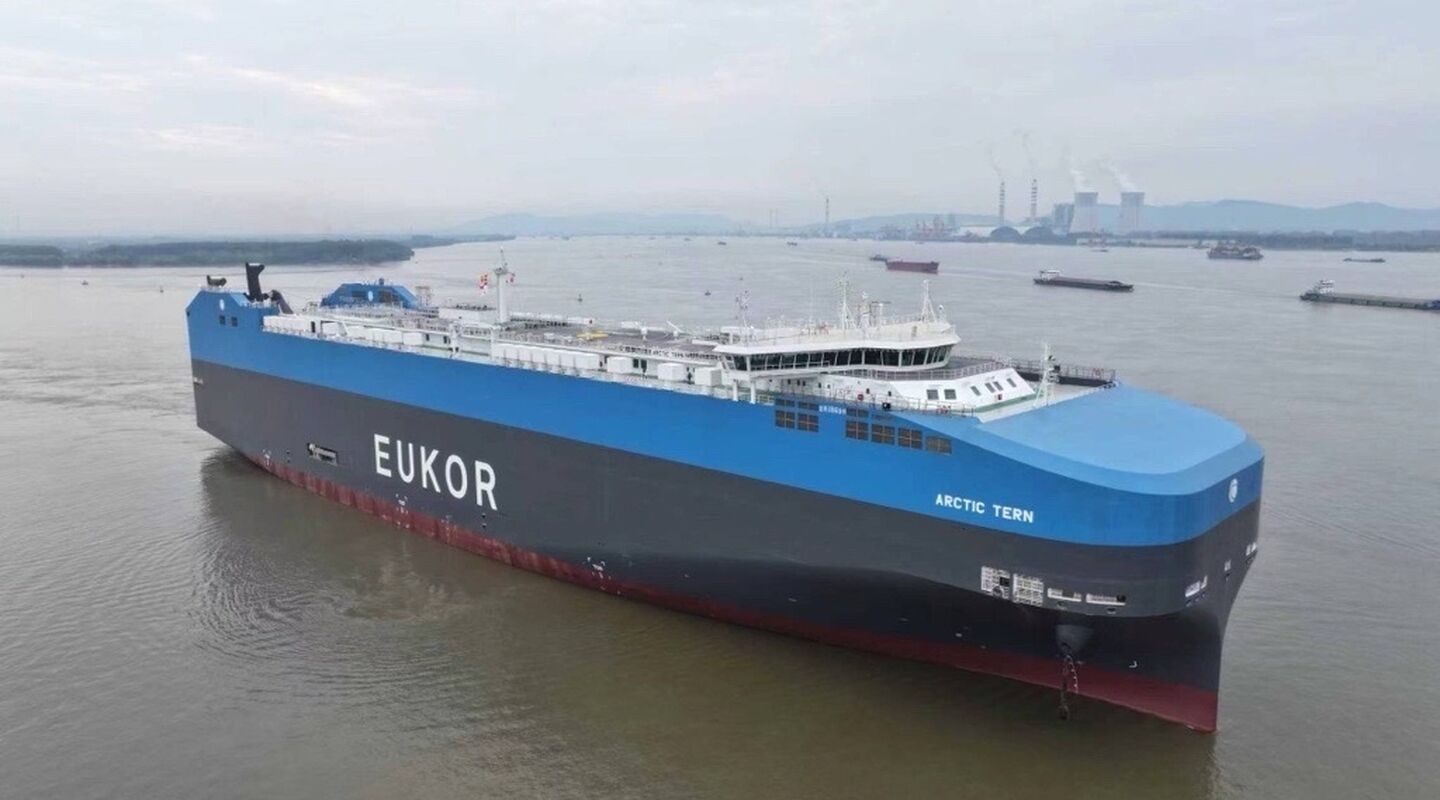
Just a week ago, we celebrated the delivery of Arctic Tern, the first vessel in our new Shaper Class series. That milestone marked the arrival of a new generation of vessels designed to support the evolving needs of our customers and the future of shipping.
But delivery is only the visible end of a much longer journey.
Designing for a future that hasn't happened yet
Building a new vessel class is much more than designing a larger ship. It starts with a simple but challenging question: What will our customers need five, ten, or even twenty years from now?
“Creating a new vessel class is about understanding what our customers will require in the years to come and ensuring we are ready to deliver,” says Lars Dessen, Vice President, Newbuilding & Projects.
Together with his team, Lars leads the process of translating operational demands into vessel design. This includes defining everything from cargo capacity and vessel size to fuel flexibility and emissions performance, ensuring the ships are built to support a rapidly changing logistics landscape.
In many ways, creating a new vessel class is an exercise in looking ahead.
A project measured in years, not months
The journey from first sketches to vessel delivery typically takes four to five years.
It begins with defining what the future vessel needs to achieve. Designers then develop concepts that are refined and shared with shipyards before a building partner is selected. Once construction plans are agreed, the real detail work begins.
And there is a lot of detail.
Over the course of a project, the team reviews hundreds of drawings and thousands of pages of technical documentation covering every aspect of the vessel, from propulsion systems and cargo decks to ventilation, accommodation, fire safety, and digital connectivity.
Once construction starts, site teams work closely with the shipyard to oversee the build, test systems, and ensure the vessel performs exactly as intended before delivery.
Meet the experts behind the Shaper Class
While ships may appear as a single finished product, they are built from thousands of decisions made by specialists across many disciplines.
Lars Ekren leads work on naval architecture, focusing on hull design, stability, and efficiency, key to ensuring reliable and cost-effective operations.
Alongside him, Sergey Ushakov drives the integration of new machinery solutions and alternative fuel technologies, helping prepare the vessels for lower-emission operations.
Kabsik Jang, who serves as Project Manager for the Shaper Class, oversees the coordination of machinery systems and onboard accommodation, ensuring that complex technical requirements come together as a functional whole.
Safety and onboard systems are equally central. Greg Mc Kevitt is responsible for ventilation and fire safety systems, while Kim Helge Brynjulfsen oversees a broad range of critical elements, including mooring arrangements, cargo systems, bridge design, and lifesaving equipment.
Electrical systems, automation, and connectivity are led by Joakim Weyhing, ensuring the vessels are equipped for secure and efficient digital operations.
Together, this multidisciplinary team ensures that every aspect of the vessel is designed with both performance and reliability in mind.
Designed for the cargo of tomorrow
All of that planning, engineering, and collaboration serves a single purpose: creating vessels ready for the future.
As cargo evolves, so must the vessels transporting it. The Shaper Class has been developed with this in mind.
Compared to previous vessel generations, the ships offer increased capacity and are designed to handle heavier cargo, including electric vehicles. This ensures greater flexibility as vehicle types and weights continue to change.
The vessels are also equipped with dual-fuel capability, enabling a shift toward alternative fuels such as methanol. While this is a necessary step for reducing emissions, it has also been one of the most complex challenges in the design process—requiring new systems, new safety measures, and close coordination across multiple disciplines.
Additional enhancements include more advanced fire safety systems, increased onboard firefighting capacity, and further optimization of hull design to improve energy efficiency.
Shaper vs. Hero: What’s different?
Bigger, smarter, and designed for the future—but what does that actually mean? What sets the Shaper Class apart?
Shaper is, of course, bigger than the hero vessels. The Shaper class vessels are dual fuel vessels which require two sets of fuel handling systems to the main engine and two sets of fuel tanks.
HERO is a conventional vessel using only oil-based fuels. The process of hull optimization was more comprehensive to make the hull design even more energy efficient.
The Shaper Class vessels have an increased number of fire zones to limit the consequence of a fire should it occur.
The Shaper vessels have a bigger capacity of CO2 onboard, important if you need to fight fire onboard, we have double the capacity of what the regulation requires.
The vessels are designed for increased cargo weight, especially for electric vehicles, as they normally weigh more than regular cars, so this is an important improvement to future proof the vessel.
Now it's the crew's turn
As Arctic Tern prepares for her maiden voyage, the crew who will take her to sea are already looking ahead with excitement.
"There's a real sense of excitement onboard. This vessel is unlike anything we've operated before. The methanol system, the new technology, and the energy-saving features make it a completely new experience for us. During the sea trail, we learned a lot through training and testing, and now we're looking forward to putting that knowledge into practice. We're proud to be the first crew to sail a Shaper Class vessel and excited to see what she can achieve once we're out at sea,” said the crew who were at the Shipyard for training prior to her maiden voyage last month.
From everyone who helped design, build, and prepare her for service, we wish Arctic Tern and her crew fair winds, safe travels, and success on the journey ahead.